
The Sadberk Hanım Museum—Turkey’s first private museum on the shores of the Bosphorus
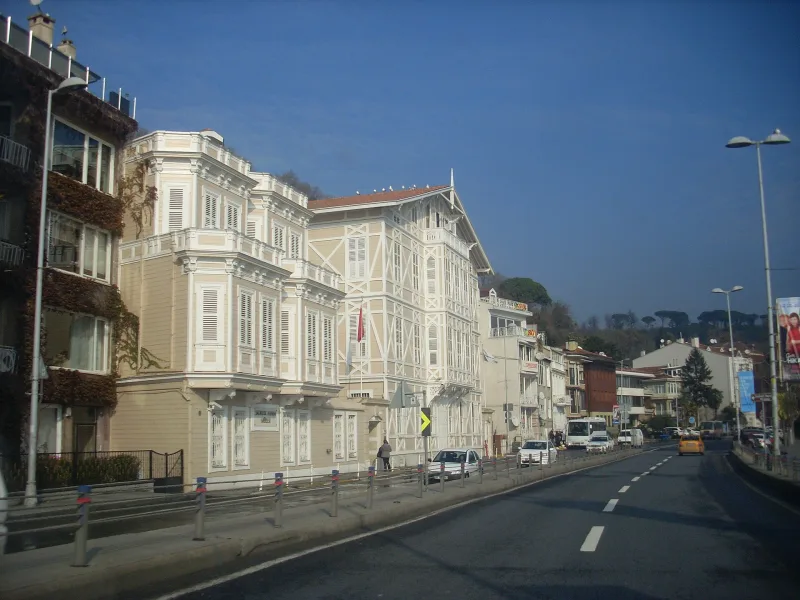
When tourist Istanbul ends at Dolmabahçe and the ferries head further and further north, the Bosphorus reveals its quiet, aristocratic side. It is here, in the Büyükdere neighborhood of the Sarıyer district, right on the water, that a wooden yalı with cross-shaped carved panels on its facade stands—the Sadberk Hanım Museum. This 19th-century mansion, once known as Azeryan Yalısı, houses a private collection of nearly twenty thousand items: from Neolithic idols dating to the 6th millennium BCE to Ottoman embroidery and 16th-century Iznik tiles. The Sadberk Hanım Museum became Turkey’s first private museum and the only place in Istanbul where the history of Anatolia is told as the personal story of a single family—the Koç family—who transformed the memorial home of a beloved woman into an encyclopedia of civilizations.
History and Origins of the Sadberk Hanım Museum
The museum’s history is, above all, the story of a single collector. Sadberk Koç, wife of Vehbi Koç, founder of Turkey’s largest holding company, had been collecting traditional handicrafts since her youth: embroidery, women’s costumes, and accessories from the Ottoman era. By the end of her life, her collection numbered about 3,500 items, and Sadberk Hanım dreamed of having them displayed to the public. She did not live to see this dream come true—the museum opened seven years after her death, thanks to the efforts of her family.
A legal obstacle arose before the opening: Turkish legislation in the 1970s did not allow private individuals to establish museums. The Koç family and officials from the Ministry of Culture and Tourism worked hard to have a separate regulation on private museums adopted. Only after that, in 1974, was a foundation for the future museum established within the Vehbi Koç Vakfı, and restoration work began in 1978.
Azeryan Yalısı—a wooden mansion that had belonged to a wealthy Armenian Catholic family from Sivas—was chosen as the museum’s location. The Koç family had purchased it back in 1950 as a summer residence and used it for nearly three decades. The restoration took two years, based on a design by the renowned Turkish architect Sedat Hakkı Eldem, and on October 14, 1980, the museum welcomed its first visitors.
In 1983, the foundation acquired a second private collection—Hüseyin Koçabaş’s collection of coins and archaeological artifacts—and the museum became a small archaeological museum. The adjacent dilapidated yalı was restored according to a design by İbrahim Yalçın; the work took two years. The new wing, which opened on October 24, 1988, was named after Sadberk Hanım’s daughter—Sevgi Gönül Binası. That same year, it received the prestigious European Europa Nostra Award in the “Heritage Conservation” category. In 2023, the museum was awarded a special prize by the Turkish Ministry of Culture and Tourism for the richness of its collections and modern conservation practices. Today, the collection comprises approximately 20,000 items.
Architecture and What to See
The Sadberk Hanım Museum consists of two connected buildings on the shores of the Bosphorus, each telling its own story. The main yalı is a historic 19th-century wooden villa with European roots. The attached wing is a modern museum structure disguised as an authentic yalı. The garden covers 4,280 square meters, and simply strolling through it sets the mood.
Azeryan Yalısı: A 19th-Century “Thread Yalı”
The main building is constructed of wood on a stone foundation and plastered over wattle-and-daub. It has three stories plus an attic; the architecture is inspired by the European vernacular tradition. The main feature of the facade is the cross-shaped wooden trim, which gives the building a completely unique appearance among the neighboring mansions. Because of these decorative elements, the yalı was long known by the popular nickname Vidalı Yalısı—“the threaded yalı.”
Inside, the atmosphere of a wealthy 19th-century Ottoman home has been preserved. The ceiling above the grand entrance, which is no longer in use, is decorated with stucco moldings inspired by ancient Roman architecture. Wooden staircases lead to the upper floors, and the walls are painted to resemble veined marble—a classic example of “trompe l’œil” decoration. The main halls on the second and third floors and the rooms opening onto them are used for exhibitions. The attic houses the collection storage, offices, and a research library.
Sevgi Gönül Building: Archaeological Wing
The adjacent building was completely reconstructed using reinforced concrete—a fire safety measure essential for the historic wooden neighborhood. The front facade is clad in wood, while the side facade features marble stucco imitating wood. From the outside, the building looks like a twin of the main building, and only an architect would immediately notice the substitution of materials.
Inside, there are four levels (three at the front, four at the back, thanks to a basement level housing a multipurpose hall and a restoration laboratory). The floors at the entrance are laid with white Afyon marble, while the floors and staircases of the exhibition halls are made of black marble from Adapazarı. The halls are completely shielded from daylight, and the display cases are individually illuminated according to modern museum standards. The total exhibition area is 625 square meters. Archaeological artifacts are displayed strictly in chronological order: from Neolithic figurines to the late Byzantine period.
What’s in the display cases: from the Neolithic to the 20th century
The archaeological wing houses jewelry, sculptures, tablets, glass, steles, and coins from civilizations that inhabited Anatolia from the 6th millennium BCE to the end of the Byzantine era. The Azeryan Yalısı exhibits Islamic artifacts, primarily of Ottoman origin, as well as textiles, costumes, and embroidery. The collection’s crowning glory is its Iznik tiles and ceramics from the 15th–17th centuries; experts consider this collection one of the finest in the world after the Topkapi Museum. A separate section features Ottoman women’s costumes from the 16th–20th centuries and accessories: shoes, bags, hats, and fans. The library houses approximately 8,700 printed and 640 manuscript books—a world of its own for researchers.
Interesting Facts and Legends
- The Sadberk Hanım Museum is the first private museum in Turkish history. Until 1980, the law did not allow private individuals to establish museums at all; a special regulation was enacted specifically for Sadberk Hanım’s collection.
- For decades, neighbors referred to the main building as Vidalı Yalısı—“the threaded” or “screw-shaped yalı”—because of the carved cross-shaped panels on its facade. This popular nickname predates the museum itself.
- In 1988, immediately after its opening, the new Sevgi Gönül wing received the Europa Nostra Award as a model of contemporary museum architecture—a rare instance of an award being granted in the year of opening.
- In 2017, the collection was expanded with 69 Anatolian carpets and textiles from the 18th to the early 20th centuries from the collection of Murat Megalli, previously housed at the Textile Museum at George Washington University. The journey of these carpets across the ocean and back is a story in itself.
- In 2007, the Vehbi Koç Summer House opened next to the museum, housing the carpet collection of American traveler Josephine Powell, which was donated to the foundation after her death. Thus, the museum expanded beyond a single building and became a small cultural quarter on the shores of the Bosphorus.
- The museum plans to move in the future to one of the abandoned port warehouses on the shores of the Golden Horn as part of the Tersane İstanbul / Haliçport project—but for now, it remains at its historic location in Büyükdere.
How to get there
The museum is located on Piyasa Caddesi in the Büyükdere neighborhood of the Sarıyer district—on the European shore of the Bosphorus, north of central Istanbul. It is about 20 kilometers from Taksim to the museum; the trip usually takes 40–60 minutes, depending on traffic.
The most convenient public transportation is the city buses running along the coastal highway. From Taksim, Kabataş, and Beşiktaş toward Sarıyer, take buses 25E and 40; the Büyükdere stop is almost right at the museum’s doorstep. From the Eminönü or Beşiktaş ferry terminals, you can take a ferry to Sarıyer (on the Bosphorus line), and from there, take a local dolmuş or taxi to Büyükdere in 5–10 minutes—this is the most scenic option.
From Istanbul Airport (IST), the most convenient way is by taxi (about 30 minutes without traffic) or by taking the M11 metro to Kağıthane and transferring to a bus. From Sabiha Gökçen Airport, the journey takes 1.5–2 hours with a transfer via Kadıköy and the Bosphorus ferry. The museum is open daily except Wednesdays; it is recommended to check opening hours and ticket prices on the official website before your visit.
Tips for travelers
The best time to visit is spring (April–May) and fall (September–October), when a stroll along the Büyükdere waterfront is a pleasure in itself. In the summer, the area gets very crowded on weekends as Istanbulites head out to the water; in winter, the streets are particularly atmospheric, but the days are short, and it gets dark as early as 5 p.m. Plan 1.5–2 hours to tour both buildings at a leisurely pace; for an in-depth exploration of Iznik ceramics and the archaeological wing, allow up to three hours.
The museum is closed on Wednesdays, so plan your visit in advance. Flash photography is prohibited inside, and in some rooms, photography is not allowed at all (restrictions are due to the preservation of textiles and paper). There is a small shop at the entrance, and the tea room on the first floor of Azeryan Yalısı is a pleasant place to take a break with a view of the Bosphorus. Please note that many exhibits are located on the upper floors of the wooden building, and accessibility for visitors with limited mobility is limited; check for elevators and ramps in advance.
Combine your visit with a walk through Sarıyer: nearby are the Rumeli Kavağı Fortress, Emirgan Park, and the famous fish restaurants of Büyükdere. If you enjoy making comparisons, it makes sense to visit the Pera Museum or the Sakıp Sabancı Museum on the same day as the museum—these three private museums form an unofficial trio of Istanbul’s most interesting private collections. And one last thing: The Sadberk Hanım Museum is not a “whirlwind tour of Anatolia,” but a slow journey through millennia as seen through the personal lens of one woman, whose name has become synonymous with a love for Turkish craftsmanship. Bring a notebook, a leisurely pace, and a good mood—and the Bosphorus will treat you to one of its quietest yet most meaningful days.